
Give as a gift
As a child in the 1960s, Lebanese artist Fouad Elkoury picked up his father's camera and began taking pictures. His quotidian approach to quietly capturing life around him developed into a surmounting collection of images and video works that trace the intimacies of living through civil war, displacement, and political uprising across the Middle East through the turn of the century. Returning to his images over time, Elkoury has produced an iconic style of video works that is both playful and sincere.
This retrospective screening brings together Elkoury's extensive filmography including short films such as Jours Tranquilles en Palestine (1998) and Nothing to lose (2019) which preserve everyday stories of Palestinian love. His ongoing trilogy of experimental films Lettres à Francine (2002) and Lettres à Huguette (2021), soon to be joined by Lettres à Etel (unreleased), challenge conventions of still image-based filmmaking, captivating viewers with long-format storytelling reminiscent of a visit to a loved one. Here, stories of the 2019 popular uprising in Lebanon join memories of the civil war, recalling earlier works On war and love (2019), Civil war, the film (2012), and Welcome to Beirut (2005). Elkoury's films are multi-sensory reflections on how it feels to navigate relationships with places, loved ones, and self, amidst dark contexts.
Welcome to Beirut (2005)
Welcome to Beirut is about daily life: driving in the city, going to the hairdresser, discussions with the grocer, visiting a motor show, a wax museum, dining out… It is a driven promenade inside the city with a few open windows through which to peep in. More ironic than sarcastic, the film reveals the state of mind of a certain Lebanese society, a direct consequence of the atlas syndrome: When one opens a European atlas of the world, Lebanon is in the middle but also in the crack, central yet invisible.
About the Filmmaker
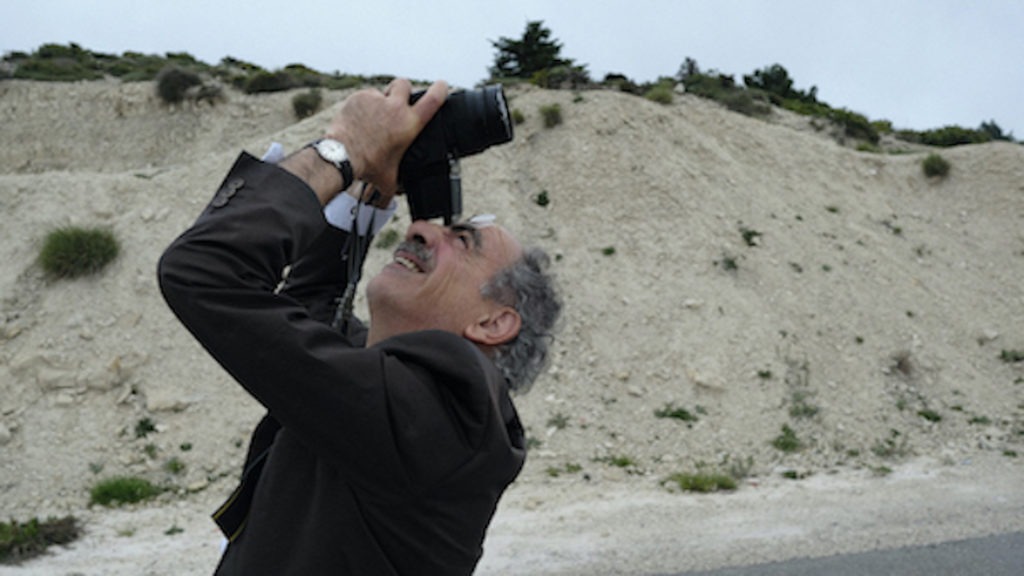 Born in 1952 in Paris, Fouad Elkoury began his artistic career by photographing Beirut during the civil war, exploring issues of survival in a war-torn city. Far from being a report of everyday life, his pictures bear the necessity of withstanding time, as underlined in his publication Beyrouth Aller-Retour (1984), and later by a postwar work, Beirut City Centre (1992), widely exhibited, and published in a book that became a landmark in the history of photography. Accounting for how to live in war zones while at the same time keeping a distance from everyday life, marks his work, as can be seen in Palestine, l'envers du miroir (1996), Liban Provisoire (1998), or in his fictional narrative Suite Egyptienne (1999).
After co-founding the Arab Image Foundation in Beirut, Elkoury questioned the purpose of single photographic images, away from aestheticism. His later works elaborate composite visuals to create new meanings, combining still photography, text and video. His Paris exhibition Sombres with its filmed counterpart Letters to Francine (2002), revolves around wounds; On war and love (2006), shown at the Venice Biennale, reflects on the dimension of intimacy in wartime.
- Year2005
- Runtime45 mins.
- LanguageArabic, French
- CountryLebanon
- Subtitle LanguageEnglish
- DirectorFouad Elkoury
- EditorMaria Gamboa, Catherine Quesemand
- Sound DesignRomain Frydman
As a child in the 1960s, Lebanese artist Fouad Elkoury picked up his father's camera and began taking pictures. His quotidian approach to quietly capturing life around him developed into a surmounting collection of images and video works that trace the intimacies of living through civil war, displacement, and political uprising across the Middle East through the turn of the century. Returning to his images over time, Elkoury has produced an iconic style of video works that is both playful and sincere.
This retrospective screening brings together Elkoury's extensive filmography including short films such as Jours Tranquilles en Palestine (1998) and Nothing to lose (2019) which preserve everyday stories of Palestinian love. His ongoing trilogy of experimental films Lettres à Francine (2002) and Lettres à Huguette (2021), soon to be joined by Lettres à Etel (unreleased), challenge conventions of still image-based filmmaking, captivating viewers with long-format storytelling reminiscent of a visit to a loved one. Here, stories of the 2019 popular uprising in Lebanon join memories of the civil war, recalling earlier works On war and love (2019), Civil war, the film (2012), and Welcome to Beirut (2005). Elkoury's films are multi-sensory reflections on how it feels to navigate relationships with places, loved ones, and self, amidst dark contexts.
Welcome to Beirut (2005)
Welcome to Beirut is about daily life: driving in the city, going to the hairdresser, discussions with the grocer, visiting a motor show, a wax museum, dining out… It is a driven promenade inside the city with a few open windows through which to peep in. More ironic than sarcastic, the film reveals the state of mind of a certain Lebanese society, a direct consequence of the atlas syndrome: When one opens a European atlas of the world, Lebanon is in the middle but also in the crack, central yet invisible.
About the Filmmaker
Born in 1952 in Paris, Fouad Elkoury began his artistic career by photographing Beirut during the civil war, exploring issues of survival in a war-torn city. Far from being a report of everyday life, his pictures bear the necessity of withstanding time, as underlined in his publication Beyrouth Aller-Retour (1984), and later by a postwar work, Beirut City Centre (1992), widely exhibited, and published in a book that became a landmark in the history of photography. Accounting for how to live in war zones while at the same time keeping a distance from everyday life, marks his work, as can be seen in Palestine, l'envers du miroir (1996), Liban Provisoire (1998), or in his fictional narrative Suite Egyptienne (1999).
After co-founding the Arab Image Foundation in Beirut, Elkoury questioned the purpose of single photographic images, away from aestheticism. His later works elaborate composite visuals to create new meanings, combining still photography, text and video. His Paris exhibition Sombres with its filmed counterpart Letters to Francine (2002), revolves around wounds; On war and love (2006), shown at the Venice Biennale, reflects on the dimension of intimacy in wartime.
- Year2005
- Runtime45 mins.
- LanguageArabic, French
- CountryLebanon
- Subtitle LanguageEnglish
- DirectorFouad Elkoury
- EditorMaria Gamboa, Catherine Quesemand
- Sound DesignRomain Frydman