
Give as a gift
This film screening series examines forced disappearance as a political strategy and an enduring lived reality across the SWANA region. Through documentary and essay films, it centers testimony, memory, and visual absence as counterpoints to state violence and historical erasure. Anchored by My Father and Qaddafi (Jihan El-Tahri, Algeria), the series traces disappearance through intimate family histories shaped by authoritarian power. Erased, Ascent of the Invisible (Ghassan Halwani, Lebanon) extends this inquiry through an exploration of urban erasure and visual absence, emphasizing disappearance as an unresolved and ongoing condition. Additional works, including Letter to my Sister (Habiba Djahnine, Algeria) Screen Recording 2020-11-20 at 1.59.44 PM , (Argyro Nicolaou, Cyprus), Prisoner and Jailer, (Muhannad Lamin, Libya), and All Is Well On the Border Front (Akram Zaatari, Lebanon) expand the exploration of memory, absence, and unfinished histories across the region.
OBLIVION is curated by Laila Sharif and is co-presented by ArteEast and BAM. This program is part of the legacy program Unpacking the ArteArchive, which preserves and presents over 20 years of film and video programming by ArteEast.
This program is supported, in part, by public funds from the New York City Department of Cultural Affairs in partnership with the City Council.
All is Well on the Border (Al-Sharit Bikhayr)
One of the artist’s earliest experiments in documentary video, All Is Well on the Border emerged from the filmmaker’s desire to understand local resistance to Israel’s occupation of southern Lebanon (1978–2000). The video brings together numerous testimonies by former Lebanese resistance members who were detained during the occupation, synthesizing them into scripts read by three actors from a teleprompter. Together, these accounts construct a human image of resistance that departs from the dominant narratives of triumphalist liberation and solidarity promoted by the Lebanese left. At the same time, by resisting the tendency in political documentary filmmaking to “give voice” to those presumed voiceless, Zaatari adopts a form of autocritique akin to that developed by Jean-Luc Godard and Anne-Marie Miéville two decades earlier in Ici et Ailleurs. While All Is Well on the Border was conceived as a tribute to their film, it also opens a space for a more affective mode of reception, allowing viewers to engage emotionally with its content.
About the filmmaker
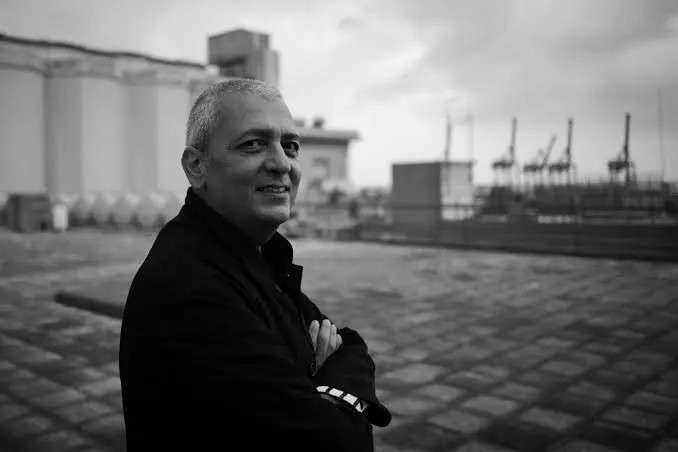 Zaatari’s practice is tied to the practice of researching and studying existing documents. He is interested in looking at the present through a wealth of past photographic records. His work reflects on the shifting nature of borders and the production and circulation of images in the context of the current political divisions in the Middle East. His videos and photographic installations look into technologies of image production and communication and the notions of surveillance, and the way different media apparatuses get employed in the service of power, resistance, and memory. His videos include two features “TWENTY EIGHT NIGHTS AND A POEM,” 2015 and “THIS DAY,” 2003. Zaatari took part in Documenta13, and represented Lebanon at the Venice biennial 2013.
- Year1997
- Runtime44 minutes
- LanguageArabic
- DirectorAkram Zaatari
This film screening series examines forced disappearance as a political strategy and an enduring lived reality across the SWANA region. Through documentary and essay films, it centers testimony, memory, and visual absence as counterpoints to state violence and historical erasure. Anchored by My Father and Qaddafi (Jihan El-Tahri, Algeria), the series traces disappearance through intimate family histories shaped by authoritarian power. Erased, Ascent of the Invisible (Ghassan Halwani, Lebanon) extends this inquiry through an exploration of urban erasure and visual absence, emphasizing disappearance as an unresolved and ongoing condition. Additional works, including Letter to my Sister (Habiba Djahnine, Algeria) Screen Recording 2020-11-20 at 1.59.44 PM , (Argyro Nicolaou, Cyprus), Prisoner and Jailer, (Muhannad Lamin, Libya), and All Is Well On the Border Front (Akram Zaatari, Lebanon) expand the exploration of memory, absence, and unfinished histories across the region.
OBLIVION is curated by Laila Sharif and is co-presented by ArteEast and BAM. This program is part of the legacy program Unpacking the ArteArchive, which preserves and presents over 20 years of film and video programming by ArteEast.
This program is supported, in part, by public funds from the New York City Department of Cultural Affairs in partnership with the City Council.
All is Well on the Border (Al-Sharit Bikhayr)
One of the artist’s earliest experiments in documentary video, All Is Well on the Border emerged from the filmmaker’s desire to understand local resistance to Israel’s occupation of southern Lebanon (1978–2000). The video brings together numerous testimonies by former Lebanese resistance members who were detained during the occupation, synthesizing them into scripts read by three actors from a teleprompter. Together, these accounts construct a human image of resistance that departs from the dominant narratives of triumphalist liberation and solidarity promoted by the Lebanese left. At the same time, by resisting the tendency in political documentary filmmaking to “give voice” to those presumed voiceless, Zaatari adopts a form of autocritique akin to that developed by Jean-Luc Godard and Anne-Marie Miéville two decades earlier in Ici et Ailleurs. While All Is Well on the Border was conceived as a tribute to their film, it also opens a space for a more affective mode of reception, allowing viewers to engage emotionally with its content.
About the filmmaker
Zaatari’s practice is tied to the practice of researching and studying existing documents. He is interested in looking at the present through a wealth of past photographic records. His work reflects on the shifting nature of borders and the production and circulation of images in the context of the current political divisions in the Middle East. His videos and photographic installations look into technologies of image production and communication and the notions of surveillance, and the way different media apparatuses get employed in the service of power, resistance, and memory. His videos include two features “TWENTY EIGHT NIGHTS AND A POEM,” 2015 and “THIS DAY,” 2003. Zaatari took part in Documenta13, and represented Lebanon at the Venice biennial 2013.
- Year1997
- Runtime44 minutes
- LanguageArabic
- DirectorAkram Zaatari